
Request a Diagnostic Conversation

FMCG and Consumer Products

When Volume Growth Stops Revealing Demand Quality

Volume is up across the portfolio. Distribution has expanded, new channels are contributing, and on paper the growth story is strong.

Then the board asks a harder question: how much of this volume reflects durable consumer demand, and how much reflects forward purchasing, discount-driven switching, or trade loading that borrows from a future period.

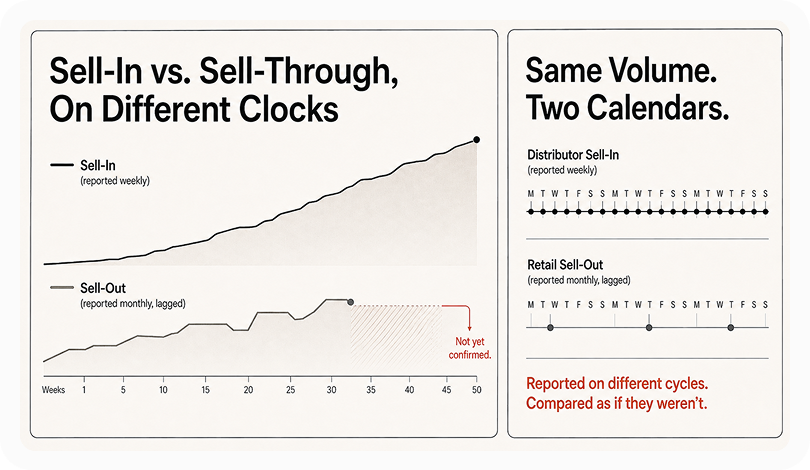
Sell-in keeps climbing. Leadership isn't always confident sell-through is climbing with it, at the same quality.

Signal 1

A question that used to be

Whether growth is incremental or discount-dependent now takes real reconciliation to answer

Signal 2

Numbers on different clocks

Distributor sell-in and retail sell-out figures are reported on different cadences and at different granularity, making them hard to compare directly for the same period

Signal 3

Volume without a brand answer

A promotion clearly moved cases, but it's unclear how much of that volume was incremental versus pulled forward from future periods

Signal 4

A slower explanation

Explaining share change in one channel now takes input from sales, marketing, and finance before anyone can point to a likely cause

Leadership Question

Is this growth building durable demand, or partly borrowing it forward, and can leadership tell the difference before the numbers are in?

What's Actually Breaking

Sell-In and Sell-Through Are Measured on Different Terms

Distributor invoicing measures what left the warehouse, typically on a different cadence and granularity than retail point-of-sale, which measures what left the shelf. Reconciling the two into one view of underlying demand is rarely done consistently, and where it happens, it's often partial.

Brand Health and Commercial Volume Live in Separate Systems

Brand tracking, awareness, loyalty, penetration, sits with marketing on its own cadence. Volume and revenue sit with sales. Growth gets reported without a consistent view of whether it's building the brand, holding it steady, or drawing down against it.

Channel Growth Has No Consistent Owner for Reconciliation

As channels multiply, general trade, modern trade, ecommerce, quick commerce, each reports on its own cycle and in its own format. Pulling them into one commercial view of underlying demand is inconsistently owned, where it's owned at all.

Request a Diagnostic Conversation

Why the obvious fix falls short

A Bigger Sales Dashboard

Adds more views of sell-in volume, without resolving how much of it reflects durable end-consumer demand versus forward-loaded or discount-driven volume.

Request a Diagnostic Conversation

A Periodic Brand Tracking Study

Gives a valuable periodic read on brand health, but rarely connects to the commercial decisions being made in between studies.

Define the Decision

Identify the recurring leadership question creating the greatest delay, disagreement, or loss of confidence.

Trace the Confidence Break

Map the definitions, systems, handoffs, and owners actually involved in producing that answer, before proposing any fix.

Redesign, Then Automate

Agree the logic, name the accountable owner, set the operating rhythm. Only then apply technology to reconciliation and exception detection.

